





A practical guide for emerging curators
For many new curators, one of the most difficult steps in their career is making a portfolio. Unlike artists, who show their artworks, curators need to show their ideas, research, exhibitions, and how they work with others. A curatorial portfolio is not just a list of past jobs, it is a document that shows how you think and how you bring an exhibition to life.
Whether you are applying for a residency, a museum job, or a study program, a good portfolio helps people understand your vision. Even if you have only done small shows or independent projects, you can still build a strong portfolio by presenting your work in a clear and simple way. 
Understanding What a Curatorial Portfolio Is
A curatorial portfolio is a professional document that explains your work as a curator. It shows how you develop exhibition ideas and how you work with artists to turn research into a real event. Unlike a résumé (CV), which just lists your experience, a portfolio provides real proof of your skills. It usually includes photos of exhibitions, project plans, research, or writing.
For emerging curators, the goal is not to show a long list of many shows. Instead, the goal is to show that you have clear ideas and that you do good research. Even just two or three well-documented projects are enough to show how you work.
Start with a Clear Curatorial Statement
Most portfolios start with a short “Curatorial Statement.” This text introduces your interests and the themes you care about. It explains your style of working with artists and galleries.
Your statement does not need to be full of difficult words or complex theories. Instead, it should simply explain the questions that guide your work. Are you interested in social issues? Are you focused on traditional materials? Do you like working with young artists from your region? A short and clear statement helps the reader understand the projects that come next.
Example Curatorial Statement
“My curatorial work focuses on how artists use materials and archives to tell stories about personal and shared history. I am especially interested in exhibitions that look at memory through things like textiles and paper. Through working closely with artists and communities, my goal is to create exhibitions that are not just displays, but spaces for storytelling and conversation.”
Document Your Curatorial Projects
The main part of your portfolio should show your best projects. Each project needs to be presented clearly so the reader can quickly understand the idea and the result.
For every exhibition or project, you should include:
- Project title
- Year and location
- List of artists
- A short text explaining the idea
- Images of the exhibition
- Your specific role in the project
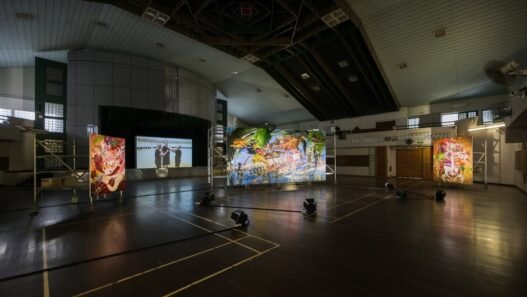
Good photos are very important. Pictures of how the art was placed in the room (installation shots) help people understand how you turn an abstract idea into a real physical experience for the audience.
Sample Project Entry
- Exhibition Title: Material Echoes
- Location: Independent Art Space, Istanbul
- Year: 2024
- Artists: 6 international artists working with textile and paper.
Project Description
Material Echoes looked at how modern artists use fragile materials to talk about memory, migration, and identity. The exhibition brought together artists who use everyday things (like fabric, thread, and paper) to tell stories. The design of the show allowed visitors to get very close to the materials to feel their texture.
Curator’s Role
- Created the main idea for the show.
- Chose the artists.
- Planned how the art would be placed in the room.
- Organized talks between the artists and the public.
Include Research-Based Projects
People who hire curators often look at their research skills. Even if you have not organized many real exhibitions yet, you can still include research projects, such as:
- Ideas for exhibitions you want to do in the future.
- Thematic plans for a show.
- Essays or articles you have written.
- Research based on old archives or history.
These projects show that you can think critically and develop interesting concepts. For example, you can present an “unrealized project” (a show that hasn’t happened yet) to show your potential.
Example Research Project
Project Title: Unfolding Narratives: Material Memory in Paper and Textile
Concept: This research project looks at how artists use paper and textile as a way to keep records of history. These fragile materials often hold traces of personal lives and traditions. The project proposes a show that brings together artists from different countries to turn these materials into visual stories. This shows the reader how you build the “base” of an exhibition.
Add Writing Samples
Writing is a huge part of being a curator. Many institutions want to see how you explain art to others through words. Your portfolio can include:
- Exhibition essays.
- Texts written for a catalog.
- Interviews with artists.
- Reviews of other art shows.
- Project proposals.
These texts prove that you can interpret art and explain its meaning. Even short texts of just two or three pages can show your “voice” as a writer.
Show Your Collaborative Work
Curating is all about working with people. Including examples of collaboration shows that you can engage with artists and the public. You might include:
- Public events you organized.
- Artist talks or panel discussions.
- Workshops or projects with the local community.
- Work you did with other writers or researchers.
This shows that your work goes beyond just hanging pictures on a wall; it shows you know how to build a community around art.
Design Matters
The look of your portfolio should be clean, professional, and easy to read. Some simple tips:
- Keep it between 10 and 20 pages.
- Use high-quality photos.
- Use the same fonts and style on every page.
- Do not put too much text on one page (leave some white space).
Most curators use a PDF file for their portfolio, but a simple personal website is also a very good idea.
Updating Your Portfolio Over Time
A portfolio is never “finished.” It grows as you grow. Every time you finish a new project, update your portfolio with:
- New photos of the show.
- New writing samples.
- Any news or articles written about your show.
- New research ideas.
Over time, this document becomes a record of your progress and your growth as a professional.
A Portfolio as a Curatorial Tool
In the end, a portfolio is more than just a document for job applications. It is a tool for you to look back at your own work. By organizing your projects and writing about them, you will start to see what themes you truly love. This helps you figure out your long-term goals.
For a new curator, the first portfolio might feel like a lot of work. But remember: even small projects (like student shows or research plans) can be the start of a great profile. What matters most is not how big the show was, but how clear and strong your ideas are.