







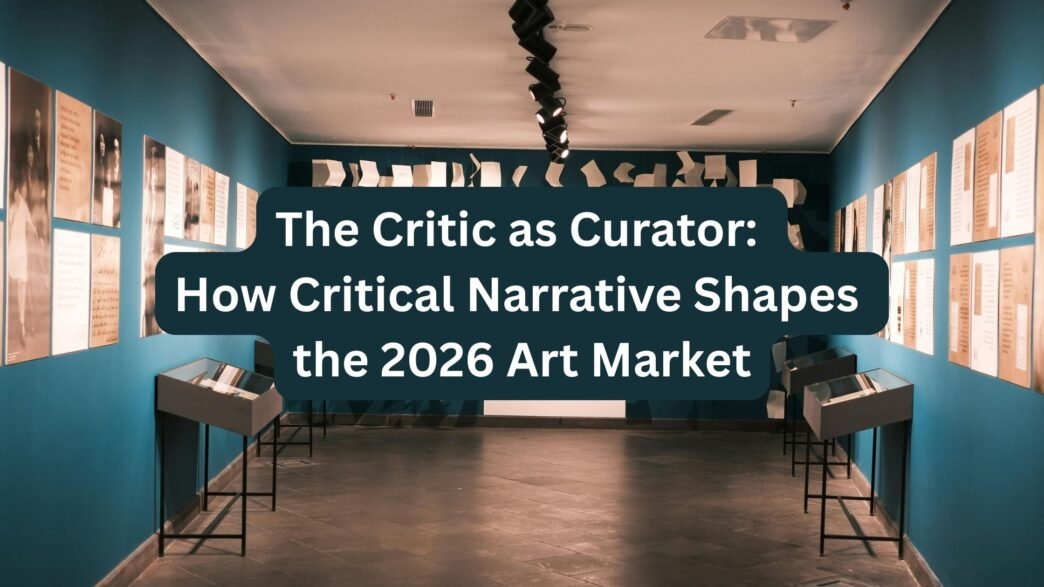
In the traditional hierarchy of the art world, the roles were once clearly delineated: the artist created, the critic evaluated, and the curator staged. However, as we navigate the complex, decentralized landscape of 2026, these boundaries have dissolved. The most influential exhibitions of this decade are no longer born solely from institutional archives; they are born from critical narratives.
The “Critic as Curator” is the new power dynamic of the art world. By weaving powerful, intellectually rigorous narratives, the modern critic does more than just review a show, they provide the conceptual blueprint that leads to physical exhibitions, shifts institutional acquisitions, and ultimately dictates market trends. For the Artinfoland Magazine community, understanding this transition is essential for any writer, curator, or collector looking to command authority in the current ecosystem.
1. From Evaluation to Construction: The Narrative Foundation
Historically, the critic was a reactive figure, standing outside the gallery and passing judgment. Today, the critic is proactive. Through deep-form essays and “Material Intelligence” research, writers are identifying patterns in contemporary practice before they are even labeled by galleries. 
When a critic identifies a recurring theme (such as the “Post-Digital Sensory” shift or “Bio-Material Sovereignty”), they are creating a Curatorial Frame. This narrative acts as a magnet, pulling disparate artists into a cohesive group. Once this frame is published and circulated, it provides the intellectual “permission” for a museum or a commercial gallery to stage a physical exhibition. The critic has essentially curated the show in the mind of the public before the first nail is driven into the gallery wall.
2. Shaping Physical Spaces through Intellectual Rigor
How does a piece of writing become a physical exhibition? It begins with Narrative Weight. In 2026, institutions are wary of “spectacle” without substance. They are looking for exhibitions that answer a specific cultural question or address a historical gap.
When a critic writes a powerful essay (moving beyond the “Death of the Press Release” style we’ve discussed), they provide the “Invisible Architecture” for the show.
- The Concept: The critic identifies a friction in the culture.
- The Selection: They “curate” a list of artists whose work speaks to this friction.
- The Realization: A museum, seeing the intellectual validity and the “Quiet Audience” engagement with the text, invites the critic to guest-curate the physical space.
The resulting exhibition feels more “urgent” because it is rooted in a documented critical discourse. It isn’t just a collection of beautiful objects; it is a physical argument.
3. Dictating Market Trends: The Critic’s “Seal of Approval”
The art market is often perceived as a game of numbers, but as we know, Data Tracks Activity, Not Depth. Market trends are actually driven by Confidence, and confidence is built through critical authority.
When a critic-turned-curator highlights a specific group of “Ultra-Contemporary” artists, they are providing a long-term “Stewardship Guarantee” to collectors.
- The Logic: If a respected critic has staked their reputation on a specific narrative, the artists within that narrative gain a “Blue-Chip” potential.
- The Shift: Collectors move away from speculative “flipping” and toward “Narrative Collecting”, buying works that are part of a significant critical conversation.
In 2026, we see this most clearly in the rise of Regional Hubs. Critics writing about the “Lagos School” or “Anatolian Neo-Materialism” have single-handedly shifted global investment toward these regions by providing the necessary historical and critical context that data alone cannot provide.
4. The “Quiet Audience” and the Power of Influence
One of the most potent weapons of the Critic-Curator is their relationship with the Quiet Audience, the museum directors, legacy collectors, and foundation heads who rarely engage with social media metrics but read every word of a rigorous critical essay.
This audience doesn’t respond to hype; they respond to Institutional Trust. When a critic provides a well-researched narrative, they are speaking directly to the people who control the “Acquisition Committees” of the world. A single influential essay can lead to a museum purchase, which then solidifies the artist’s market value forever. This is the ultimate “Next Step” in the power of the word.
5. Professional Strategies for the 2026 Critic-Curator
For those looking to transition from writing to shaping physical reality, the path requires a specific set of professional behaviors:
- Identify the “Unseen” Pattern: Don’t write about what is already trending. Look for the “Minor Keys” in the studio visits that no one else is discussing.
- Build a “Material Archive”: Base your writing on the physical reality of the work. Use “Material Intelligence” to describe why a specific use of bio-plastic or reclaimed stone matters now.
- Develop “Legacy Thinking”: Ask yourself, “Will this narrative still be relevant in 2036?” Curators and collectors are looking for longevity, not temporary “content.”
- The Collaborative Pitch: Use your essays as a portfolio. Approach regional biennials or independent spaces with a “Narrative Proposal” rather than just a list of artists.
The Sovereign Voice
The death of traditional art marketing has created a vacuum that only the critical voice can fill. In 2026, the critic is no longer an observer on the sidelines; they are the Sovereign Architect of the art world. By writing powerful narratives, they create the “Gravity” that pulls artists, institutions, and capital into a new alignment.
For the Artinfoland Magazine community, this is the highest level of professional practice. Whether you are writing an essay for our magazine or planning an exhibition in a regional hub, remember: the world doesn’t just need more art; it needs more Meaning. And meaning is the one thing the critic provides better than anyone else.