





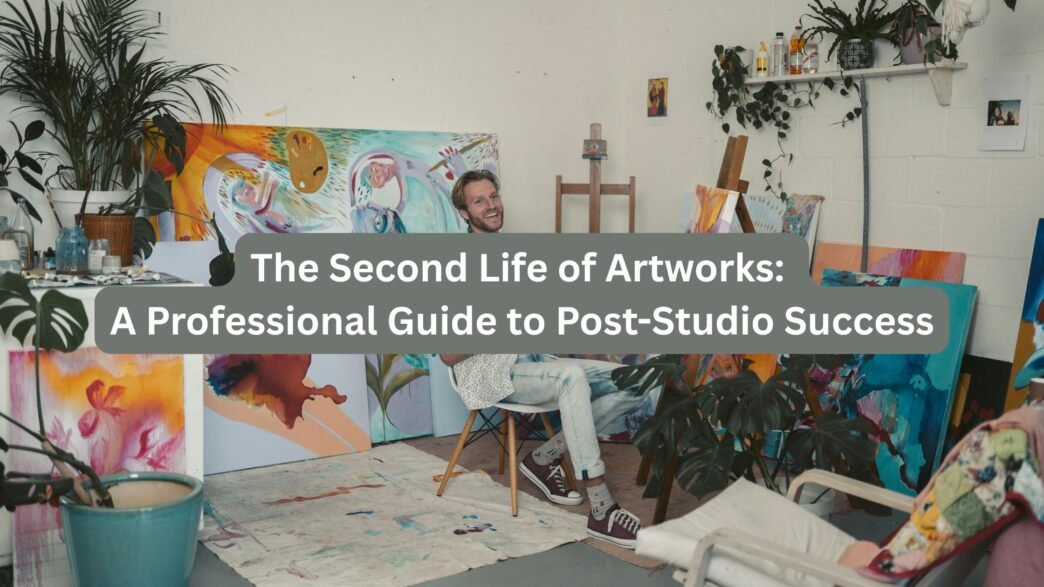
For many artists, the studio is the primary theater of meaning, the space where the story begins, where paint dries, materials settle, and a form finally emerges after weeks of labor. Eventually, the piece is finished, or at least finished enough to leave the sanctuary of the studio. But in the sophisticated art ecosystem of 2026, the completion of a work is merely its “birth.” What follows is a complex journey through galleries, private collections, and institutional archives. Each stage adds a new layer to the work’s history, financial value, and cultural resonance. Understanding this “second life” is not just an administrative task; it is a professional necessity that allows artists to think more strategically about how their practice moves through the world.
From Studio to Exhibition: The Public Transition
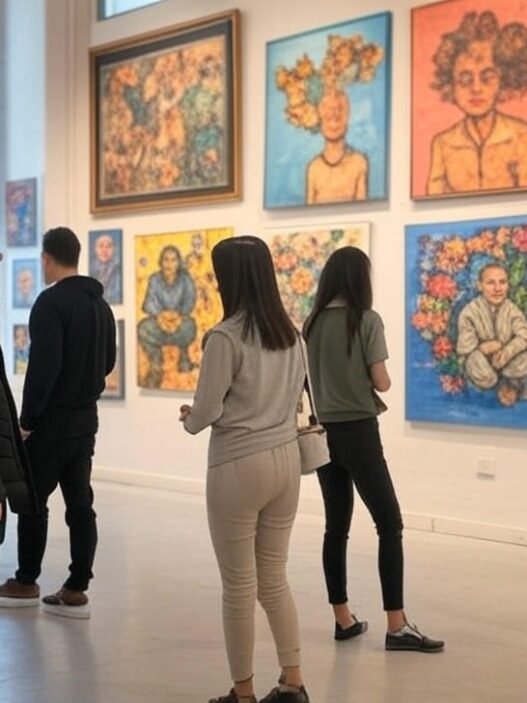
The first destination for an artwork after it leaves the studio is typically an exhibition, be it a commercial gallery show, an artist-run space, or a museum project. In these environments, the work undergoes a radical transformation: it sheds its private context and becomes part of a public conversation. Curators act as architects of this transition, placing the work alongside others to build intellectual relationships between themes and materials. The spatial design, lighting, and installation choices profoundly influence the viewer’s experience; a sculpture that once sat in a cluttered studio corner may suddenly achieve monumental status when framed by the “White Cube” or a sensory-rich 2026 exhibition space. For the artist, this is a moment of release where the work begins to exist independently, interacting with a diverse audience that brings its own neurodiverse and cultural interpretations to the piece.
Documentation and Visibility: The Parallel Life of the Image
Perhaps the most critical, yet frequently overlooked, stage of an artwork’s second life is its digital birth through documentation. In an era where “screen fatigue” is high but digital reach is absolute, professional photographs and installation views are the primary ways a work circulates globally. These images appear in portfolios, gallery platforms, and social media, often serving as the “first encounter” for curators and collectors. A well-documented piece develops a parallel life as a digital image, capable of traveling to international biennials or being saved in a collector’s private archive long after the physical exhibition has closed. In 2026, the quality of this documentation acts as the artwork’s “digital provenance,” influencing its perception for decades to come. 
Entering Private Collections: The Intimacy of Ownership
When an artwork is acquired by a collector, it enters a chapter defined by domestic intimacy and personal stewardship. Inside a private collection, the work moves from the sterile public gallery to a personal environment, hanging in a home, rotating between residences, or being housed in a professional storage facility. Collectors often develop deep emotional and intellectual relationships with the works they live with, and over time, the piece becomes part of their daily life rather than a temporary spectacle. However, this transition also places the collector in the role of a caretaker. How they manage the work’s “Direct Care,” from climate control to conservation, directly impacts the artwork’s physical legacy and future condition.
The Role of Galleries: Long-Term Stewardship
Beyond the initial sale, galleries serve as the long-term stewards of an artist’s legacy. A professional gallery tracks where a piece goes, maintains the relationship with the collector, and often facilitates future institutional placements. They monitor the secondary market with a keen eye, advising collectors on reselling to protect the artist’s career trajectory from speculative volatility. This network of professional relationships prevents artworks from “disappearing” into opaque private spaces and ensures they remain legible within the broader art discourse. In 2026, the gallery is the primary manager of the artwork’s ongoing biography after its public debut.
The Secondary Market: Resurgence and Volatility
Years or decades later, an artwork may reappear in the secondary market through auction houses or private dealers. This stage grants the work a new public moment, often accompanied by fresh critical attention and revised valuations. Auction catalogs and previews bring renewed visibility to the artist’s older bodies of work, but this stage also introduces an element of uncertainty. While a high auction price can solidify an artist’s “Blue-Chip” status, the secondary market moves beyond the artist’s direct control, influenced by global economic trends and “Material Intelligence” shifts. It is a stage where the work’s historical significance is often re-measured against its financial performance.
Institutional Futures: Entering Art History
The transition into a museum collection marks the most significant shift in an artwork’s life. Here, the work moves from being a commodity of the contemporary market to becoming a permanent asset of cultural memory. Museum conservation teams and curators take over the role of stewardship, archiving the work’s documentation and revisiting it in new historical narratives decades later. In this context, the artwork is protected from the fluctuations of the market; its meaning evolves as future generations of museum-goers encounter it in entirely new cultural moments. The artwork is no longer just “contemporary”, it is historical.
The Unseen Journey: Storage and Conservation
Contrary to popular belief, a large portion of an artwork’s second life is spent in silence. Professional art storage facilities, with their strict “Invisible Architecture” of temperature and humidity control, are essential for the survival of fragile works. While storage may seem passive, it is a vital phase of “Material Intelligence” management, where works are crated and cataloged to wait for the right exhibition opportunity. These resting periods allow the work to survive through environmental shifts and logistical fluctuations, preparing it for its next reappearance in the public eye.
The Artist’s Perspective: Managing the Distance
For the artist, watching a work navigate these stages can be a psychological challenge. A piece that once occupied the center of the studio may end up in a living room halfway across the world or sit quietly in a crate for years. This distance, however, is a sign of the artwork’s successful independence. Once released, the work accumulates stories, owners, and interpretations that the artist never could have predicted. Reclaiming the narrative through a professional online presence helps the artist stay connected to the work’s journey without being exhausted by it.
The Artwork as a Living Object: A Continuous Evolution
Ultimately, the second life of an artwork reminds us that art objects are not static artifacts but living participants in an ecosystem. They travel, they change contexts, and they gather meaning over time. Each exhibition, each collector, and each museum acquisition adds another layer to the artwork’s biography. For the professionals of Artinfoland Magazine, understanding this journey shifts the focus from the act of production to the act of legacy. The studio is the birthplace, but the world is where the artwork’s full, complex life truly unfolds.