





Opening its doors across five major venues from March 14 to June 14, 2026, the 25th Biennale of Sydney, titled Rememory, has already generated immense global anticipation, earning a spot at the top of Time Out’s list of the world’s best exhibitions for the year. Curated by the internationally acclaimed Hoor Al Qasimi, this edition shifts the focus from linear historical narratives to the fragmented, visceral, and living nature of collective memory.
The Curatorial Framework: Echoes of Toni Morrison
The thematic core of the Biennale is anchored in the concept of “rememory,” a term coined by the late Nobel laureate Toni Morrison in her 1987 novel Beloved. It refers to the act of revisiting, reconstructing, and reclaiming histories that have been marginalized or actively erased. Al Qasimi brilliantly translates this literary concept into a spatial and visual experience. Rather than treating history as a static archive, the curation positions memory as an active, evolving dialogue, drawing heavily on First Nations communities and the divergent diasporas that shape the contemporary global landscape.
Standout Installations and Reclaimed Biographies
With 83 artists and collectives spanning 37 countries, the exhibition is vast, yet it maintains intimate connections to personal and familial biographies.
- Ema Shin: In a profound meditation on the historical and cultural erasure of women, Shin draws inspiration from a family tree kept by her grandfather. The record spanned 32 generations but exclusively listed male members and women who gave birth to sons. Her resulting works serve as a powerful tribute to the women absent from canonical histories, transforming personal genealogy into a universal statement on visibility.
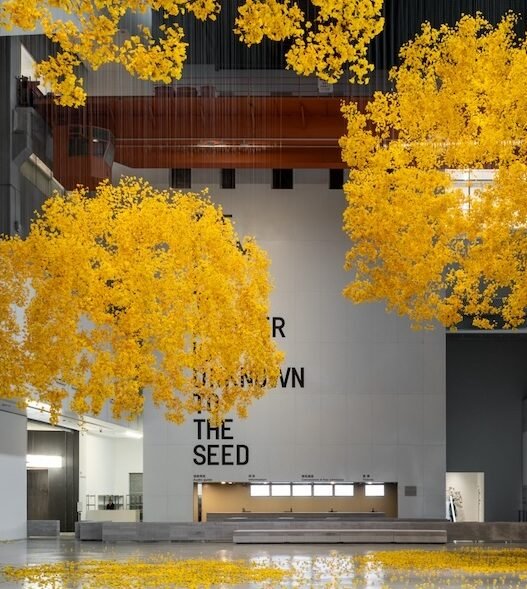
- Gabriel Chaile: At the White Bay Power Station (a monumental industrial space returning as a premier venue) the Argentine sculptor presents a massive, functioning clay oven. Blending sculptural form with community activation, the oven will serve Peruvian cuisine to visitors, blurring the lines between static art, ancient ritual, and communal nourishment.
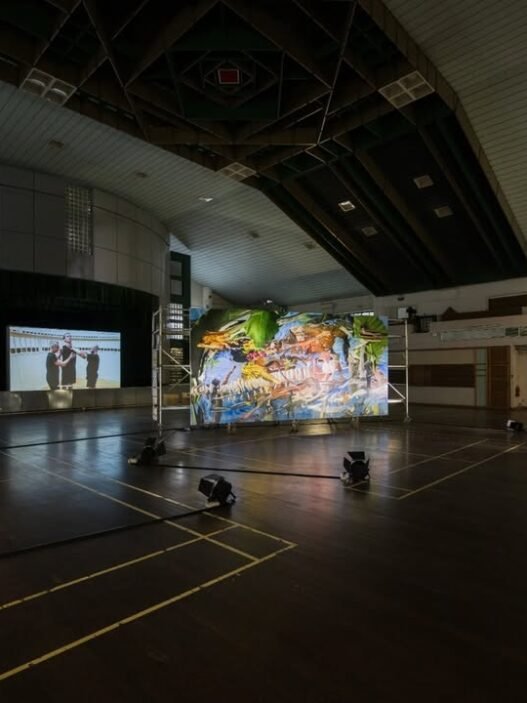
- Tuấn Andrew Nguyễn: Exhibiting at the Chau Chak Wing Museum, the acclaimed Vietnamese American artist presents The Unburied Sounds of a Troubled Horizon. His practice continues to explore the post-traumatic reverberations of the Vietnam War, utilizing memory as a potent form of political resistance.
- The Ngurrara Canvas II: A landmark inclusion at the Art Gallery of New South Wales is the rare presentation of this 80-square-meter collaborative painting, originally created in 1996 by over 40 artists from the Great Sandy Desert to support their native title claim. Its inclusion underscores the legal and spiritual weight of visual documentation.
Global Market Context and Institutional Impact
For those monitoring global market dynamics, Rememory signals a continued institutional shift toward deeply researched, socially engaged practices over purely aesthetic commodities. Biennales of this scale frequently dictate the acquisition strategies of major museums and set the thematic tone for upcoming international art fairs. By foregrounding artists who utilize extensive archival research and community engagement, the 25th Biennale of Sydney champions a value system where art is evaluated on its capacity for historical recuperation and cross-cultural dialogue.
The strategic expansion of venues (from the industrial grandeur of White Bay to the Penrith Regional Gallery in Western Sydney) also demonstrates a successful model for decentralizing high-profile cultural events, increasing accessibility, and driving broader audience engagement.
Rememory is not simply an exhibition to be viewed; it is an archive to be experienced. It successfully challenges the dominant narratives of contemporary art, offering a profound look at the stories that have shaped our present and the voices that will define our future.