





The Cultural Tug-of-War: Public Funding vs. Private Sponsorship in 2026
In 2026, the global art world is no longer just a space for aesthetic appreciation; it is a high-stakes battlefield where the question “Who pays for this?” determines “What do we see?” As we navigate a year defined by the “K-shaped” economic recovery and the rise of sovereign storytelling, the tension between state-supported culture and corporate-driven creativity has reached a boiling point. For the Artinfoland community, understanding this dynamic is the difference between securing a life-changing grant or being sidelined by a shifting corporate brand strategy.
1. The State Patron: Guardian of the “Intellectual North Star”
Public funding remains the primary engine for art that is experimental, critical, and often “unprofitable.” In 2026, models like Germany’s Kulturstaat and France’s Ministry of Culture continue to treat art as a public good.
- The Vision: Public funds (from the NEA in the U.S. to the Arts Council in Korea) are designed to protect national heritage and foster “risk-taking” art. This is the realm of the 2026 Venice Biennale and the Dakar Biennale, where curators like the late Koyo Kouoh have pushed for decolonial narratives that don’t always have a commercial “buyer.”
- The 2026 Reality: However, the “soft power” of the state is under pressure. We are seeing a politicization of funding across Europe and the Americas. Governments are increasingly conditioning grants on alignment with national narratives. In 2026, many “independent” art spaces have seen budgets crater (some by as much as 40%) as state priorities shift toward conservative or nationalist agendas.+1
- The Benefit for Artists: State funding offers institutional validation. A grant from a national council is a “gold stamp” on a CV that attracts future private collectors and museum acquisitions.
2. Private Sponsorship: The Corporate Curator and the “Glow-Up”
If the state is the “guardian,” private sponsorship is the “accelerator.” In 2026, sponsorship has moved beyond mere logo placement into long-term brand-building architecture. 
- The Vision: Private wealth (driven by luxury giants like LVMH and tech moguls) seeks “cultural cachet.” They don’t just want to fund a show; they want to be the show. This is seen in the rise of Private Art Foundations (like the Bourse de Commerce in Paris or the AMA in Venice), where collectors bypass traditional museums to write art history on their own terms.
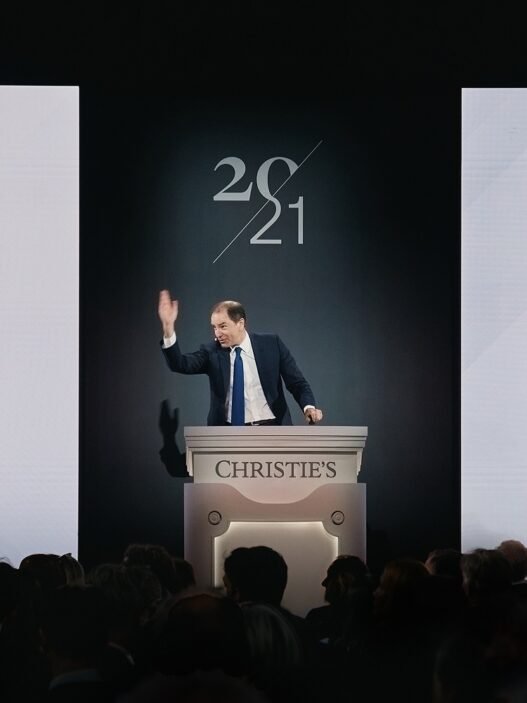
- The 2026 Trend: Corporations are now acting as curators. Art Basel Qatar 2026 is a prime example: a massive cultural event where private liquidity allows for high-tech, immersive experiences that a state budget could never approve in the same timeframe.
- The Risk: Private money often demands “brand safety.” Works that are too “messy,” radical, or critical of corporate power may find themselves quietly filtered out by algorithmic ranking systems or brand managers.
3. The “Mid-Market” and the New Patronage
The most disruptive force in 2026 isn’t a billionaire or a minister, it’s the community. We are witnessing a surge in the bottom quintile of the market (works under $50,000), which now accounts for 85% of global transaction volumes.
- Democratic Patronage: Platforms like Patreon, Kickstarter, and decentralized DAOs have created a third funding stream. Here, the “public” acts as a private sponsor. By 2026, artists are using these tools to build “salaries” directly from their followers, bypassing both the bureaucracy of the state and the censorship of the corporation.
- Informational Advantage: Crowdfunding is no longer just about money; it’s a market research tool. A successful campaign proves to bigger sponsors (public or private) that there is a real, hungry audience for a specific type of art.
4. Who Really Decides Culture?
The power dynamic of 2026 is a complex ecosystem of “Besideness.” As curator Larry Ossei-Mensah notes, the most influential art today exists in the “tension” between these forces.
| Decision-Maker | Primary Motivation | Impact on Artists |
| State Committees | National Identity / Public Education | Long-term stability & prestige, but slower and prone to censorship. |
| Corporate Boards | Brand Value / High-Net-Worth Networking | Rapid scale & high tech, but requires “brand-safe” content. |
| Private Foundations | Legacy Building / Storytelling Control | Total curatorial freedom for the collector, but exclusive entry. |
| The Digital Public | Personal Connection / Community Growth | Maximum independence, but requires the artist to be a “business-of-one.” |
The Conclusion for the Artinfoland Community
In 2026, the “sovereign artist” is the one who understands how to play both sides. You apply for public grants to gain critical respect and historical standing, but you leverage private sponsorship and digital tools to scale your production and maintain your financial independence.
The “gatekeepers” haven’t disappeared; they’ve simply multiplied. The person who truly decides culture in 2026 is the one who can bridge the gap between these two worlds without losing their creative soul.