







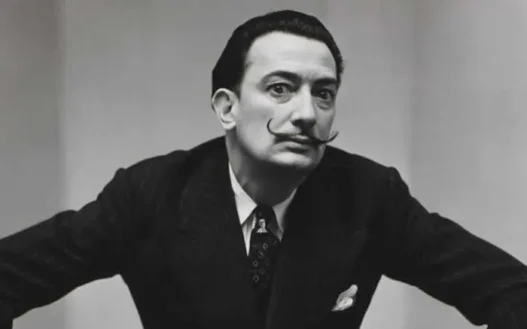
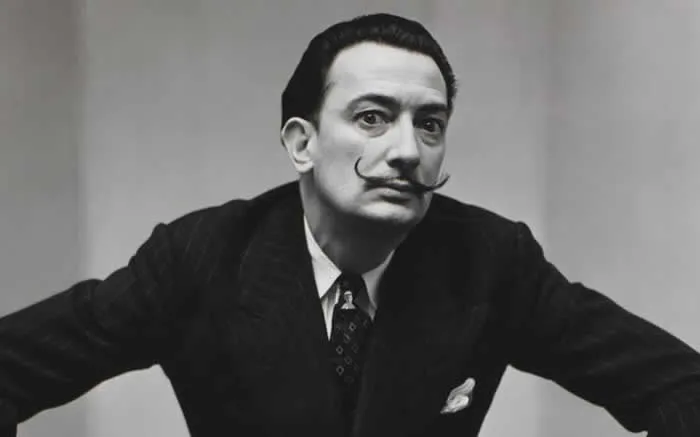
In the quaint town of Figueres, Spain, in 1904, a legend was born. But Salvador Dalí’s story begins with a twist that reads more like a gothic novel than an artist’s biography. Just nine months before his birth, his family had lost their first-born son, also named Salvador.
That shadow loomed over young Dalí like a ghost. His parents told him he was his brother’s reincarnation, a living echo of the dead. It raises a haunting question: Did Dalí ever truly know who he was, or was his entire life a battle to prove he wasn’t just a replacement?
The Anatomy of Fear: Grasshoppers and Ghosts
Dalí’s inner haunting was only half the story. To understand the surrealism of his canvases, one must look at his “crippling” phobias. Dalí suffered from acrididophobia, a sheer, paralyzing terror of grasshoppers. 
It started in the sunny streets of his childhood, where bullies spotted his panic and turned it into a weapon, chasing him with the buzzing insects. That trauma didn’t fade; it mutated. In Dalí’s art, the grasshopper became a monster symbolizing destruction, decay, and raw anxiety. Look closely at his masterpieces, and you will see these beasts devouring his figures—nightmares rendered in oil and pigment.
A Forbidden Education
The fears didn’t stop with insects. Dalí’s father, a strict and towering figure, attempted to “protect” his son from the dangers of the world through a brutal method: showing him gruesome medical photos of venereal diseases.
The strategy backfired spectacularly. It scarred Dalí for life, twisting the concept of intimacy into something repulsive yet fascinating. This fear manifested in his work as the “vagina dentata”, the toothed trap. He often painted aggressive lion heads as symbols of forbidden desires, guarding the gateway to intimacy. Instead of seeking real-world connection, Dalí retreated into the labyrinth of his own mind, using his obsessions to fuel his creative engine.
The Paranoiac-Critical Method: Turning Trauma into Gold
For Dalí, dreams and nightmares were the same thing: pure fuel. Drawing from Sigmund Freud’s theories of the subconscious, he invented the “Paranoiac-Critical Method.”
This wasn’t just sketching sleepy visions; it was a genius hack to spark paranoia on purpose and then rationally deconstruct the resulting hallucinations. Dalí was essentially farming his deepest fears.
- Melting Clocks: Represent the warping of time and the fragility of reality.
- The Grasshopper: An echo of childhood torment and waste.
By shaping his traumas into art, Dalí turned personal demons into timeless masterpieces. His pain was not a hindrance, it was the very spark of his brilliance. He didn’t just survive his fears; he curated them.
The Artinfoland Reflection
Dalí’s legacy teaches us that the subconscious is the ultimate studio. His work proves that our most deep-seated anxieties don’t have to paralyze us; they can be the raw material for our most profound expressions.
What do you think, could your own fears inspire something epic? Have you ever used a personal challenge to fuel your creative practice?