






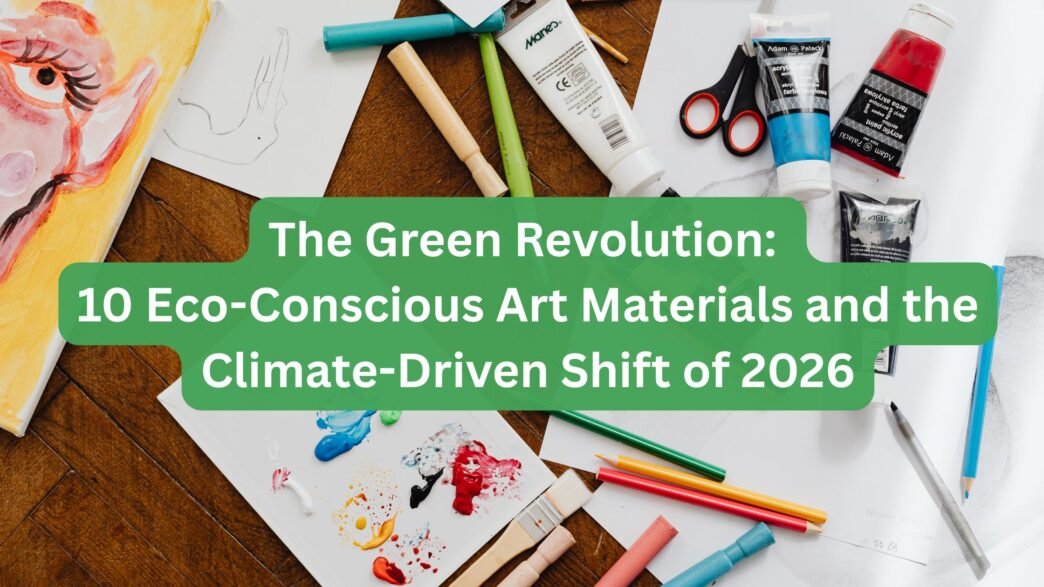
The Green Revolution: 10 Eco-Conscious Art Materials and the Climate-Driven Shift of 2026
In 2026, sustainability has transitioned from a niche ethical choice to a fundamental requirement for success in the global art market. For the Artinfoland community (from emerging artists to seasoned curators), understanding these materials is essential for navigating the requirements of international residencies and the preferences of a new generation of “Ethical Collectors.”
Part I: 10 Detailed Eco-Conscious Art Materials for 2026
1. Mycelium-Based Bio-Composites and Pigments
- The Material: Mycelium (the root structure of fungi) is being used both as a sculptural substrate and a source of biological color.
- Deep Dive: Unlike plastic-based foams, mycelium composites are grown in molds using agricultural waste. They are completely biodegradable and fire-resistant. Mycelium Pigments are extracted through a non-toxic fermentation process, providing deep, “living” earth tones (reds, ochres, and purples) that offer a measurable capacity for aesthetic adaptation without heavy metals.
- Use Case: Ideal for large-scale, temporary installations or 3D sculptures that return to the earth after the exhibition ends.
2. Bio-Resins (Plant-Based Epoxy)
- The Material: Modern bio-resins are derived from agricultural byproducts like soybean oil, castor bean oil, and even waste from the paper pulp industry.
- Deep Dive: Traditional resins release harmful Volatile Organic Compounds (VOCs). 2026’s top-tier bio-resins (like BioCast) contain up to 25–40% renewable biomass. They maintain the same optical clarity and UV resistance as petroleum-based resins but with a significantly lower carbon footprint and reduced toxicity for the artist.
- Use Case: Casting, geode art, and protective coatings for paintings.
3. Stone Paper (Calcium Carbonate)
- The Material: A tree-free paper made from crushed limestone or marble waste combined with a small amount of non-toxic resin (HDPE).
- Deep Dive: Producing one ton of stone paper saves roughly 20 mature trees and 60,000 liters of water. It is naturally waterproof, tear-resistant, and has a velvety smooth texture that doesn’t “feather” when used with ink.
- Use Case: Outdoor sketching, watercolor journals, and archival prints that need to withstand humidity.
4. Hemp and Organic Linen Canvases
- The Material: Fibers from the Cannabis sativa plant or organic flax.
- Deep Dive: Hemp is a “carbon sink,” absorbing more CO2 than it produces. It requires no pesticides and very little water compared to conventional cotton. In 2026, hemp canvases are preferred for their superior tensile strength and resistance to mold, making them more durable than standard cotton.
- Use Case: High-end oil and acrylic painting where longevity and environmental ethics are priorities.
5. Algae-Based Inks and Soy Pigments
- The Material: Inks derived from microscopic algae or soy protein.
- Deep Dive: Most commercial inks are carbon-black, made from fossil fuels. Algae-based inks are carbon-negative, pulling CO2 out of the atmosphere during production. They are safe to touch and fully compostable.
- Use Case: Screen printing, relief printing, and digital fine-art prints.
6. Recycled Ocean Plastic Filaments
- The Material: 3D-printing filaments made from upcycled “Ghost Nets” and ocean waste.
- Deep Dive: Artists like those featured in the 2026 LagosPhoto Biennale are using these to turn pollution into high-value sculptural objects. The materiality itself serves as a socio-political statement on oceanic health.
- Use Case: Large-scale 3D-printed sculptures and architectural art interventions.
7. Zero-VOC Water-Based Paints
- The Material: High-pigment paints that use water as a carrier instead of petroleum solvents.
- Deep Dive: In 2026, brands like Permaset and Jo Sonja lead the market by eliminating VOCs entirely. These paints are odorless and non-toxic, allowing artists to work in smaller, unventilated studio spaces (common in urban hubs like Eskişehir or Istanbul) without health risks.
- Use Case: Studio painting, indoor murals, and educational workshops.
8. Reclaimed Metal and E-Waste Assemblage
- The Material: Copper, gold, and aluminum salvaged from discarded electronics or industrial scrap.
- Deep Dive: With the rise of “Material Alchemy,” artists are refining the process of cleaning and treating E-waste to create luxurious, gold-leaf-like finishes without the ecological cost of mining.
- Use Case: Mixed-media collage and jewelry art.
9. Natural Adhesives (Rice Paste & Bone Glue)
- The Material: Ancient binding techniques (like Yamato Rice Paste) returning to the modern studio.
- Deep Dive: Synthetic glues often contain microplastics and toxic fumes. Plant-based and starch-based adhesives are archival-quality, acid-free, and reversible, which is a gold standard for art conservation.
- Use Case: Collage, bookbinding, and delicate paper-based installations.
10. Local Soil and Mineral Pigments (Site-Specific Color)
- The Material: Pigments hand-gathered from the artist’s immediate surroundings.
- Deep Dive: This movement, known as “Earth-Rooted Palettes,” eliminates the carbon footprint of international shipping. Artists grind local clay and minerals to create a palette that is geographically unique to their location.
- Use Case: Land Art, site-specific murals, and authentic “sovereign storytelling.”
Part II: How Climate Change is Rewriting the Art Market in 2026
Climate change has shifted from a “theme” in art to a “structural force” in the economy:
- The Rise of the “Ethical Collector”: New investors in 2026 utilize “Sustainability Metrics” when buying. An artwork’s carbon footprint is now often included in its provenance.
- Institutional Mandates: Major international residencies and biennials (like the 2026 Venice Biennale) now require artists to submit an “Environmental Impact Statement” as part of their application process.
- Regional Hub Development: To avoid the massive carbon cost of global shipping, the market is consolidating into regional powerhouses (Doha, Lagos, Seoul). This “Global Branding, Local Grounding” strategy favors artists who use sustainable, locally sourced materials.
- Banning of Toxic “Blue Chips”: Certain traditional materials (like lead-based whites or specific toxic cadmium pigments) are facing regulatory bans in the EU and North America, forcing a market-wide shift toward the eco-alternatives listed above.
Artinfoland Professional Tip:
If you are applying for a fully-funded residency in 2026, highlighting your use of Sustainable Art Practices in your portfolio will significantly increase your chances of selection. Curators are looking for artists who are “Future-Ready.”