







The Boutique Shift: Why Smaller Art Fairs are Defining the 2026 Global Market
For the better part of two decades, the contemporary art world was defined by the “Super-Fair” phenomenon. Names like Art Basel, Frieze, and FIAC became synonymous with global cultural dominance, massive, logistical behemoths that gathered hundreds of galleries and tens of thousands of visitors under one roof. These events were built on a philosophy of “maximalism”: more galleries, more VIPs, more square footage, and more astronomical sales. However, as we move through 2026, the cracks in this high-pressure, high-cost model have become impossible to ignore. A profound cultural and economic recalibration is underway, shifting the industry’s focus toward boutique art fairs.
The “Mega-Fair” model, while still profitable at the very top of the pyramid, has begun to suffer from its own success. Collectors are reporting historic levels of “fair fatigue,” a psychological and physical exhaustion stemming from the sensory overload of viewing thousands of works in a trade-show environment. Simultaneously, mid-tier and emerging galleries have found themselves priced out of these elite circles, where the cost of a single booth can often exceed an entire year’s studio budget for a dozen artists.
In response, the 2026 art market has embraced the “Boutique Era.” These smaller, nimble, and highly curated fairs are no longer seen as secondary events; they are now the primary engines of discovery and market resilience. They offer something the giants cannot: intimacy, intellectual rigor, and a sustainable path forward for a decentralized art world. This shift is not just a trend, it is a survival strategy for a market that is increasingly prioritizing authenticity over spectacle.
1. Curatorial Rigor over Commercial Chaos
The most significant advantage of the boutique fair in 2026 is its ability to prioritize curation over volume. In a mega-fair, the sheer scale of the event often forces galleries to play it safe. To justify the six-figure investment of a booth, galleries frequently bring “sellable” works—familiar names and decorative aesthetics that appeal to a broad, fast-moving audience. This creates a homogenization of art where every booth begins to look like the last.
Boutique fairs, such as 1-54 Marrakech or Art Karlsruhe, operate on a different frequency. Because they host fewer galleries (typically between 20 and 60), the organizers can enforce a strict thematic or regional focus. This allows the fair to function more like a museum exhibition than a marketplace. Collectors in 2026 are increasingly “narrative-driven”; they aren’t just looking for a canvas to fill a wall; they are looking for works that participate in a specific cultural conversation, be it decoloniality, eco-criticism, or the “In Minor Keys” philosophy of the 2026 Venice Biennale. The smaller format allows for deep-dive solo presentations that give artists the space to tell their full story, creating a more profound intellectual impact that translates into long-term market value.
2. The Localization of the Art Market and Regional Resilience
The 2026 art market is defined by a move toward decentralization. For years, the industry was obsessed with “the global,” forcing everyone to fly to the same three or four cities every year. However, the rise of regional boutique fairs has proven that cultural relevance doesn’t require a 15-hour flight.
Smaller fairs act as vital “hubs” for regional ecosystems. Events in cities like Lagos, Istanbul, and Mexico City are now attracting international attention precisely because they don’t try to look like Basel. They lean into their local context, showcasing artists who address the specific sociopolitical realities of their environment. This localization has created a more resilient market. When global shipping costs spike or international travel becomes restricted by new “Carbon Tax” regulations, these regional fairs continue to thrive. They serve a dedicated base of local and regional collectors who feel a personal stake in the growth of their own artistic community. In 2026, being “the biggest fair in the world” is less prestigious than being “the most important fair in the region.”
3. Economic Sustainability for Emerging Galleries and Artists
The financial barrier to entry has historically been the greatest “gatekeeper” in the art world. The boutique model is actively dismantling this barrier. By offering lower booth fees, shorter run times, and hybrid digital-physical models, smaller fairs allow younger, more avant-garde galleries to participate in the international market.
In 2026, we see many boutique fairs adopting “Alternative Economic Models.” Some fairs have moved away from fixed booth rentals, opting instead for a lower base fee combined with a small percentage of sales, or even “co-operative booths” where three or four galleries share a space. This reduces the financial risk for the gallery, which in turn allows them to take risks on the artists they show. As a result, the most innovative, experimental, and challenging art of 2026 is no longer found in the blue-chip aisles of the mega-fairs; it is found in the experimental corners of boutique fairs like Conductor or Post-Fair, where the pressure to “sell out” is replaced by the freedom to “stand out.”
4. Intimacy as the New Premium: The Collector’s Experience
The profile of the art collector has changed. The new generation of collectors, particularly those active in the “Mid-Market Awakening“ ($1,000–$10,000 band), values transparency and relationship-building. They find the cold, high-speed environment of the mega-fair intimidating and impersonal.
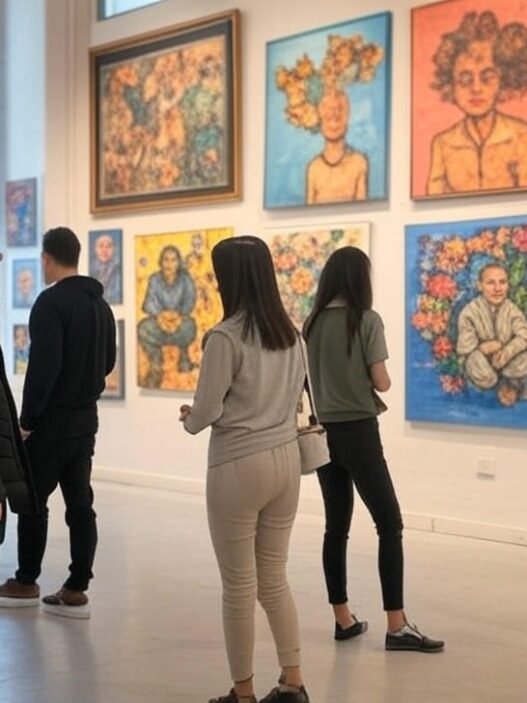
Boutique fairs offer the luxury of time and access. In these smaller settings, a collector can spend an hour talking to a gallerist about an artist’s technique, or even meet the artist in person for a coffee. This level of engagement builds a different kind of brand loyalty. In 2026, buying art is an act of community participation. Smaller fairs facilitate “VIP experiences” that aren’t about velvet ropes and champagne, but about studio visits, panel discussions, and intimate dinners. This “slow art” movement mirrors the “slow food” movement; it is a rejection of mass consumption in favor of a curated, thoughtful, and human-centric experience. For a collector, discovering a “breakout star” in a small fair feels like a personal achievement, creating a deeper emotional bond with the artwork that ensures it stays in the collection for decades rather than being flipped for a quick profit.
The Artinfoland Perspective
As we look toward the remainder of 2026, the success of the boutique model serves as a clear signal: the future of art is diverse, decentralized, and deeply human. For the artists and curators reading Artinfoland, these fairs represent the most strategic entry point into the global conversation. They are the spaces where the “gatekeepers” are most accessible, and where the “narrative” still matters more than the “transaction.”
The mega-fairs will likely remain as the “industry summits” for the ultra-wealthy, but the soul of the 2026 art world has moved to the boutique. It is in these smaller rooms that the most important stories of our time are being told, one carefully curated booth at a time.


Well written, informative and positive article on the rise of the boutique fair, thank you