




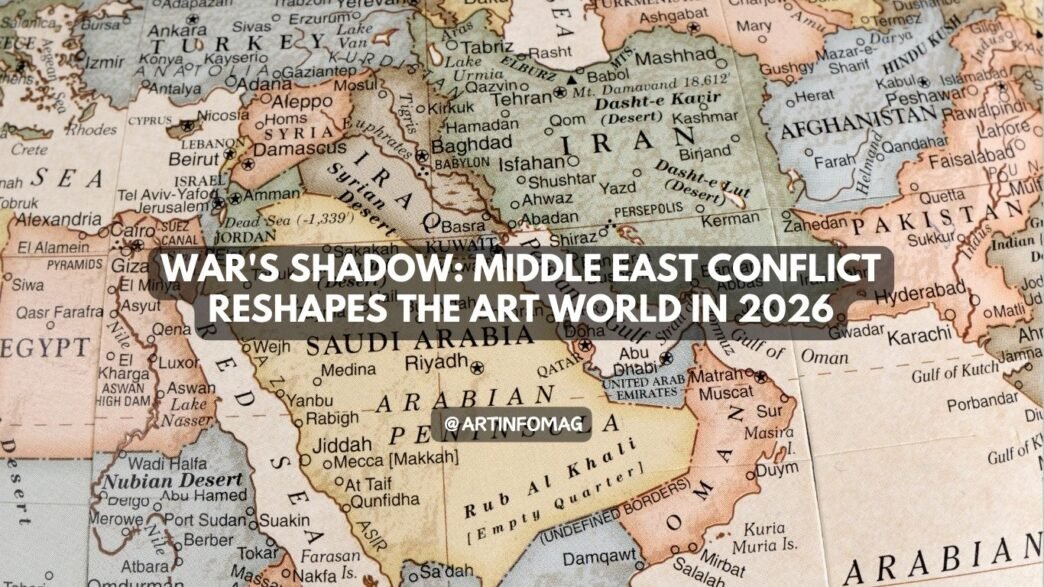
The Shadow of War: How the Middle East Conflict Is Reshaping the Global Art World in 2026
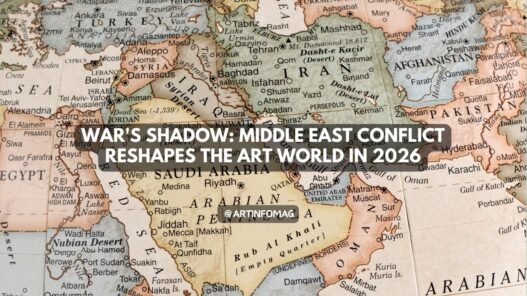
The escalating conflict in the Middle East (marked by U.S.-Israeli strikes on Iran beginning late February 2026, followed by Iranian missile and drone retaliations across the Gulf) has sent shockwaves through the art ecosystem. What began as regional tensions has disrupted logistics, threatened irreplaceable heritage, shuttered institutions, and forced a reckoning with the Gulf’s role as the art market’s newest powerhouse. Experts from market analysts to heritage specialists agree: this is a pivotal moment that could accelerate fragmentation in the global trade while amplifying art as a tool for resistance and memory.
Immediate Disruptions to Fairs, Galleries, and Travel
The Gulf’s art calendar (once seen as insulated from regional volatility) now faces direct threats. Art Dubai (April 15–18, 2026) is under the most immediate pressure, with galleries weighing cancellations amid flight disruptions, heightened security risks, and canceled delegations.
Artnet senior market reporter (March 6, 2026) notes that the conflict has “raised alarms” across the industry, clouding Art Dubai and testing the long-term commitment of Western firms like Sotheby’s, Christie’s, and Frieze that have heavily invested in the region. A European dealer told Artnet it’s “hard to imagine” the fair proceeding normally given travel impacts, with some collectors already reconsidering trips.
Frieze Abu Dhabi (November 2026) preparations continue, but a spokesperson emphasized solidarity with the region while acknowledging uncertainty. Broader logistics chaos (grounded flights, closed airspace, and shipping delays) has hit cultural events hard, with museums and galleries in Dubai (e.g., Leila Heller Gallery, The Third Line), Abu Dhabi (Louvre Abu Dhabi, Jameel Arts Centre), and beyond suspending in-person programs or shifting online.
Anders Petterson, founder and CEO of ArtTactic, warns in the Financial Times (March 2026) that a prolonged conflict will “inevitably impact the Middle Eastern art market,” disrupting the rhythm of fairs, exhibitions, and auctions vital to the ecosystem.
Threats to Cultural Heritage and Sites
Direct damage to historic sites has sparked urgent calls from preservation bodies.
UNESCO (March 11, 2026) expressed deep concern over impacts on World Heritage sites, noting damage to Iran’s Golestan Palace (Tehran), historic mosques/palaces in Isfahan, and sites in Israel (Tel Aviv’s Bauhaus “White City”) and Lebanon (Tyre). Lazare Eloundou Assomo, Director of the World Heritage Centre, urged protection under international law, highlighting risks across the region.
Europa Nostra (March 11, 2026) deplored threats to museums, cultural institutions, and professionals, citing damage to Golestan Palace and Isfahan sites as collateral in escalating hostilities.
Bijan Rouhani (Oxford University, Endangered Archaeology in the MENA) and Robert Hillenbrand (British art historian) emphasized Iran’s pre-existing heritage vulnerabilities (neglect, looting, underfunding) now compounded by conflict, with recovery potentially limited by international political divides.
In Gaza, ongoing destruction has wiped out much of the modern cultural ecosystem (universities, libraries, galleries, studios), with PEN America documenting heavy damage to 36 major sites (as of late 2025 reports). Artists like Shareef Sarhan and Sobhi Qouta continue documenting via makeshift means, turning survival into protest against cultural erasure.
Art as Resistance, Memory, and Reflection
Amid destruction, conflict-themed art surges in visibility.
Cultural analysts (Brussels Morning, January 2026) describe Middle East conflict art gaining “unprecedented” attention in London and global capitals, reframing war, displacement, and suffering through visual narratives that intersect diplomacy, media, and protest.
Iranian artists in the diaspora (France 24, March 2026) have spoken out, using work to resist erasure and preserve memory. Gazan creators persist despite lost studios and thousands of artworks, emphasizing art’s role in cultural survival.
This wave reflects broader trends: galleries becoming arenas for reflection during diplomatic stagnation.
Market and Institutional Implications
The 2025 UBS/Art Basel report showed modest recovery (4% growth to $59.6 billion), but experts warn prolonged conflict could stall Gulf momentum, the market’s key growth driver amid Western slumps.
Short-term: uncertainty deters high-end buyers, private sales dip, logistics raise costs. Longer-term: potential “re-regionalization” (Artnet podcast, March 2026), with trade shifting to safer hubs as global instability rises.
Political sensitivities fuel boycotts, e.g., calls to exclude Israel from Venice Biennale 2026 (Art Not Genocide Alliance letter, signed by 178 participants).
In sum, the Middle East conflict is forcing the art world to confront fragility: heritage at risk, fairs in limbo, and investment tested. Yet it also amplifies art’s power as witness and bridge, reminding us that in times of war, culture endures as both casualty and quiet defiance.
References
- Artnet News, “What War in the Middle East Could Mean for the Art Trade” (March 6, 2026)
- Financial Times, “The art market flocked to the Gulf. Then war broke out” (March 2026)
- UNESCO statements (March 11, 2026)
- Europa Nostra press release (March 11, 2026)
- Brussels Morning, “Middle East Conflict Art Gains Global Attention 2026” (January 16, 2026)
- Al Jazeera and Reuters reports on heritage damage (March 2026)
- PBS NewsHour on Gaza cultural loss (December 2025, ongoing relevance)
For Artinfoland readers: How is this affecting your practice or collecting? Share your thoughts, we’re tracking this evolving story.