






Auction results make headlines. But they measure only one kind of value — the most visible, the most volatile, and arguably the least interesting. This article maps the other systems through which art is valued, and why they matter more than the hammer price.
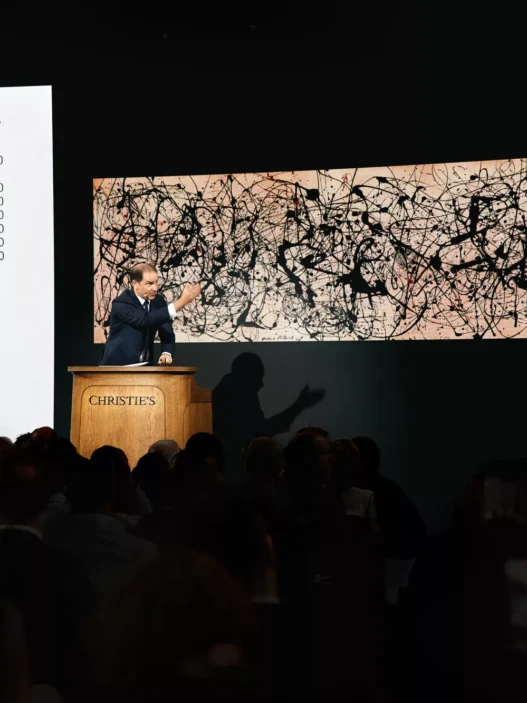
When a painting sells for ninety million dollars at Christie’s, the number becomes the story. It is reported in newspapers that do not otherwise cover art, cited in conversations as evidence that the art market is either thriving or absurd, and attached permanently to the artist’s name as a kind of market credential. What is almost never reported is what the price actually means — or, more precisely, what it does not mean.
Auction prices are a specific measurement of a specific kind of demand at a specific moment. They capture the willingness of the wealthiest collectors in the world to compete for a single object, in a room designed to generate competitive excitement, at a particular point in economic history. They are real data. But they are not a measure of artistic quality, historical significance, emotional resonance, or cultural importance. They are not even a reliable measure of an artwork’s enduring financial value — auction results are volatile in ways that make stock prices look stable.
This article maps the other systems through which art is valued — systems that are older, more complex, and in most respects more meaningful than what happens in a saleroom. Understanding them is useful for artists navigating their careers, for collectors thinking beyond the market, and for anyone trying to understand why certain works survive across centuries while others, once expensive, disappear from memory entirely.
An artwork that sells for nothing may be studied for centuries. An artwork that sells for millions may be forgotten in a generation. Price and value are related, but they are not the same thing — and confusing them is one of the art world’s most expensive habits.
The Problem with Treating Price as Value
The conflation of market price with artistic value is not new, but it has intensified in the past thirty years as the art market has grown into a global financial system with the institutional apparatus — indices, funds, data analytics, storage facilities — of any other asset class. In this environment, the language of value migrates naturally toward the financial. An artist’s “market” becomes a proxy for their significance. A high auction record is reported as a validation. A falling price is read as a verdict.
The problem is not that financial value is irrelevant — it is clearly relevant to artists who need to sustain a practice, to collectors who are making significant investments, and to the institutions whose collections are partly valued in financial terms. The problem is when financial value crowds out the other systems of valuation, because those systems are doing different and in many respects more important work.
Consider a few historical examples. Vermeer’s paintings were sold at modest prices during his lifetime and nearly forgotten after his death; his critical rehabilitation in the nineteenth century restored a value that the seventeenth-century market had entirely missed. Van Gogh sold one painting in his lifetime and is now the most recognisable name in Western art. El Greco was considered eccentric and derivative for centuries before twentieth-century critics recognised his importance. In each case, the market was not merely wrong — it was measuring something other than what history cared about.
The Six Systems of Art Valuation
Art is valued through at least six distinct systems, each with its own logic, its own institutions, and its own relationship to time. They overlap, influence each other, and sometimes contradict each other — and none of them is more “real” than the others. Understanding all six is what it means to understand how art actually works in the world.
System 01 — Market Value
What someone will pay for it, right now
Market value is the most visible and least stable form of art valuation. It is determined by supply and demand at a specific moment — shaped by collector taste, economic conditions, gallery promotion, auction house strategy, and the social dynamics of who is buying what. A work’s market value can rise dramatically if the right collector acquires it, if a major retrospective creates new demand, or if the artist’s death triggers scarcity-driven speculation. It can fall just as quickly. Market value tells you what the work is worth to a buyer today. It tells you very little about what it will be worth in fifty years, or what it means in any other register.
System 02 — Critical Value
What the critical discourse says the work contributes
Critical value is conferred through writing — reviews, catalogue essays, academic articles, monographs, and the sustained attention of critics and scholars over time. It is the system that asks: what does this work do that no other work does? What problem does it solve, what territory does it open, what conversation does it advance? Critical value is slower to accumulate and slower to erode than market value, but it is not permanent — critical reputations are revised, rehabilitated, and in some cases dismantled across generations. The critical consensus of 1970 about who mattered in American painting looks quite different from the consensus of 2025. What critical value does that market value cannot is locate work within a discourse — give it a position in art history that market data alone cannot provide.
System 03 — Institutional Value
What institutions decide to preserve, display, and study
Museum acquisition is one of the most powerful acts of valuation available to the art world. When a major public institution acquires a work, it makes a claim about the work’s permanent significance — that it belongs to the record of human cultural production that future generations should have access to. This claim is not infallible; institutions deaccession works, revise their collecting priorities, and reflect the biases of their historical moment. But institutional validation has a kind of durability that market results and critical fashions do not. A work in MoMA’s permanent collection exists in a different category of attention from one that is not — regardless of its auction history. Institutional value is also the system that most directly shapes what artists are studied in schools, included in survey textbooks, and taught to the next generation of practitioners and audiences.
System 04 — Cultural Value
What a community understands itself through
Cultural value operates at a different scale from the other systems and is the least legible to the art market. It is the value an artwork holds for a community, a people, or a historical tradition — not because it is expensive or critically celebrated, but because it is part of how a group understands itself and its place in time. Indigenous art objects held in colonial museum collections have enormous cultural value for the communities they were taken from, regardless of their market price or their position in Western art historical discourse. Folk art, vernacular architecture, craft traditions, and community murals all carry cultural value that the auction market has no mechanism for measuring. Cultural value is also the most resilient: it survives the collapse of markets, the revision of critical canons, and the closure of institutions. It lives in communities rather than in systems.
System 05 — Emotional Value
What an artwork means to the person standing in front of it
Emotional value is the most intimate and the most widely distributed form of art valuation. It is the response of a specific person to a specific work at a specific moment — a response that may have nothing to do with market price, critical reputation, or institutional status. People have had transformative encounters with works that are unknown outside their own communities, unfashionable by any critical measure, and worth little or nothing on the market. They have also stood unmoved in front of works sold for tens of millions of dollars. Emotional value is not democratic in the sense of being equal for all works — some works clearly produce more intense and more widely shared emotional responses than others. But it is democratic in the sense of being available to anyone, regardless of expertise or financial position. It is also, in the longest run, the value that determines which works endure in human memory beyond the institutional structures that first preserved them.
System 06 — Historical Value
What the work reveals about its moment in time
Historical value is conferred by time and is the only form of valuation that cannot be fully assessed while the work is being made. It is the value an artwork acquires by virtue of what it reveals about the conditions of its creation — the materials, techniques, ideas, and social contexts that produced it. Works of modest artistic ambition can have enormous historical value if they document a moment, a practice, or a community that would otherwise go unrecorded. Documentary photographs, vernacular paintings, commercial illustrations, and amateur works have all proved historically significant in ways their makers could not have anticipated. Historical value is also the system that most dramatically overturns market judgments: works dismissed by their contemporaries gain it, while works that commanded spectacular prices can lose relevance as the cultural moment that produced them recedes.
How the Systems Interact — and Conflict
These six systems do not operate independently. They influence each other in complex ways, sometimes reinforcing the same judgment and sometimes producing sharp contradictions. Understanding the interactions is what makes it possible to read the art world’s value signals with any sophistication.
Market value and critical value have a complicated relationship. High prices can attract critical attention — the work that sells for ninety million dollars generates column inches that would otherwise go to other artists. But sustained critical interest can also drive market value, as collectors follow the judgment of curators and scholars they trust. The two systems feed each other, but they do not track each other reliably. Some of the most critically celebrated art of the twentieth century was made by artists who remained commercially marginal. Some of the most expensive art is treated with polite critical indifference.
Institutional value and cultural value are perhaps the most interesting in their contradictions. The institution — the museum, the archive, the academy — is the dominant mechanism through which cultural value is recognised, preserved, and transmitted. But the institution also systematically excludes certain cultural traditions, prioritises certain geographies and class contexts, and imposes its own frameworks of significance on everything it collects. The repatriation debates of recent decades are a direct consequence of this tension: objects of immense cultural value to specific communities were acquired by institutions that treated them as art historical specimens rather than as living cultural property. The institution said: this is significant and we will preserve it. The community said: this is ours and you took it.
Practical Example — When the Systems Diverge
Consider two works. The first: a canvas by a young painter, sold at auction in 2021 for $4.2 million. Major gallery representation. Extensive press coverage. Collector demand that outpaces supply. Critical reception cautious — several reviews note that the work’s market has moved faster than its ideas.
The second: a series of photographs taken by a community organiser in a southern American city between 1965 and 1980. Documenting neighbourhoods, faces, and political moments now visible nowhere else. Never exhibited in a major institution. The photographer died in 2003. The prints exist in an archive at a small regional museum. Their market value is minimal. Their historical and cultural value is extraordinary.
In fifty years, which of these two bodies of work will matter more to art history? The answer is genuinely uncertain — but anyone who answers without hesitation is probably confusing price with value.
What Creates Enduring Value — the Evidence
Looking across the works that have accumulated enduring value across multiple systems — critical, institutional, cultural, historical — certain patterns emerge. They are not guarantees, and they are not a formula. But they are recurring features worth understanding.
Pattern 01
Formal innovation that addresses a genuine problem
The works that persist in art history are almost always ones that solved a problem — a formal, perceptual, or conceptual problem that the field was grappling with. They did not merely look new; they answered a question that had been accumulating. This is different from novelty, which can produce strong initial market responses but rarely sustains them across decades.
Pattern 02
Depth that rewards sustained attention
Works that endure are almost always richer on the twentieth encounter than on the first. They contain complexity that discloses itself slowly — formal, iconographic, or conceptual layers that keep producing new readings across different historical moments and different audiences. Works whose entire content is available in the first thirty seconds of looking tend not to accumulate the sustained critical and scholarly attention that produces enduring value.
Pattern 03
A relationship to its moment that remains legible
Enduringly valued works almost always bear a meaningful relationship to the moment in which they were made — not as mere documents of it, but as formal responses to it. This is what makes them historically valuable even as their original context recedes. Works that are entirely legible only within their original cultural moment tend to lose value as that moment passes. Works that addressed their moment while also addressing something larger — a formal condition, a human experience, a perceptual question — retain significance across changing contexts.
Pattern 04
Survival — physical and institutional
A significant portion of art historical value is simply a function of survival. Works that were preserved — through institutional acquisition, private care, archival attention — have the opportunity to accumulate value over time. Works that were lost, destroyed, or undocumented cannot. This makes documentation and conservation not merely administrative activities but genuine contributions to cultural value. The artists who document their work carefully, who ensure it enters institutional collections, who create the conditions for its physical survival, are participating in the system of valuation even if they never see the long-term results.
What This Means for Artists
For artists, understanding the multiple systems of valuation is not merely an intellectual exercise — it has practical implications for how to think about a career. The dominant narrative of success in the contemporary art world is heavily weighted toward market metrics: gallery representation, auction results, collector demand, press coverage, prize recognition. These are real and useful markers of a certain kind of success. But they measure only one of the six systems, and they do so with a time horizon of years rather than decades or centuries.
An artist who optimises entirely for market value — making work that sells, cultivating collector relationships above all else, choosing projects for their commercial legibility — may build a lucrative career that produces nothing that endures beyond their market moment. An artist who ignores market and institutional realities entirely may make work of genuine significance that is never seen, never documented, and never enters any system of valuation at all. The most durable careers tend to be those in which the artist takes the market seriously enough to survive financially while understanding that what they are actually doing is working in registers of value that take much longer to settle.
For artists — a practical insight
The decisions that most affect the long-term value of your work are not primarily market decisions. They are decisions about documentation — whether your work is photographed, archived, and traceable. About writing — whether there is critical and scholarly text that locates your practice in a discourse. About institutional engagement — whether works enter collections that will preserve and exhibit them. About the depth of the work itself — whether it rewards the kind of sustained attention that produces enduring value across changing contexts. These decisions are within an artist’s control in ways that market outcomes are not.
What This Means for Collectors
For collectors, the multiple valuation systems present a different set of implications. The collector who buys at auction is participating in the market value system and taking on its volatility and its time horizon. The collector who acquires work that has not yet attracted market attention but shows depth in the other systems — works with critical engagement, institutional interest, cultural significance, emotional power — is making a different kind of bet, on a longer time horizon, with different risks and different potential rewards.
The collectors whose collections have proved most significant over time are not those who bought at the highest prices. They are those who acquired early, based on a reading of quality and significance that preceded market consensus. This is an argument for developing genuine visual and critical literacy — for learning to read work across multiple valuation systems rather than relying on price as a proxy for significance.
It is also worth noting that the most lasting collector legacies — the collections that become institutional gifts, that shape museum holdings, that define how future generations understand a period of art history — are almost never built primarily on expensive trophy acquisitions. They are built on depth of engagement with specific artists, movements, or moments: the collector who understood something before the market did, and whose collection becomes the primary evidence of that understanding.
Reading the Room — How to Evaluate Value Beyond Price
The practical question, for anyone trying to assess an artwork’s value across multiple systems, is: what do I actually look at? The following are not a checklist — they are a set of questions that open up the systems of valuation that price data cannot access.
On critical value
Has serious critical writing engaged with this work over time — not just reviews at the time of exhibition, but sustained scholarly or critical attention across at least a decade? Is it cited by other artists and critics as a reference point?
On institutional value
Is this work, or work by this artist, represented in the permanent collections of public institutions? If so, which ones — and are those institutions known for collecting with long-term significance rather than trend responsiveness?
On cultural value
Does this work belong to a tradition or community that gives it significance beyond the Western contemporary art market? Is it understood and valued by the people or communities it most directly addresses?
On historical value
What does this work document or embody about the moment in which it was made? Would its loss represent an irreplaceable gap in the record? Is there anything in the work that will be more legible, not less, as the conditions that produced it recede into history?
On depth
Is there more to this work than its initial impact? Does sustained looking — returning to it across different moods, different contexts, different levels of knowledge — produce new readings? Is there a complexity here that resists full disclosure?
On your own response
What does the work actually do to you — not what you think it should do, not what others have said it does, but what it actually produces in you, standing in front of it? Emotional value is not a guarantee of any other kind of value, but its consistent absence in your response to highly valued work is worth taking seriously as information.
The auction room measures one thing: what the richest buyers in the world will pay for an object, today. That is useful information. It is not the same as knowing what the object is worth — to art history, to the culture that produced it, to the person who stands in front of it and finds, unexpectedly, that something shifts.
Find Opportunities That Build Lasting Value
ArtInfoLand lists residencies, grants, and open calls across 85+ countries — programmes that invest in artistic depth, critical development, and institutional engagement. Find the opportunities genuinely right for your practice.