






In a season marked by geopolitical drama at the Venice Biennale and cautious optimism across the industry, New York’s May 2026 auction week arrived like a thunderclap. Over just a few days, Christie’s and Sotheby’s together moved nearly two billion dollars in blue-chip art, delivering one of the strongest performances in recent memory and signaling a clear recovery at the very top of the market.
Christie’s Historic $1.1 Billion Night
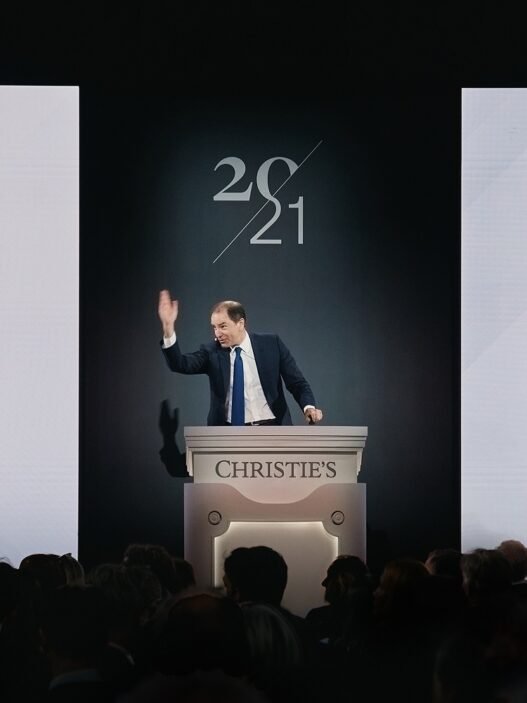
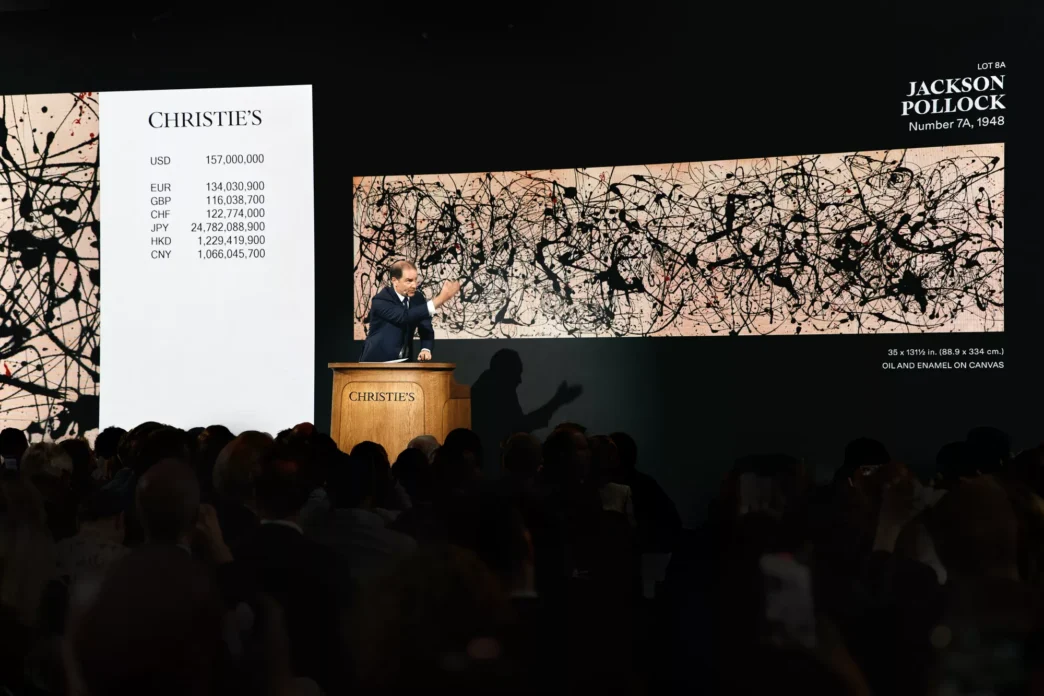
The undisputed highlight came on the evening of May 18 at Christie’s Rockefeller Center headquarters. In a single, electric sale drawn largely from the collection of the late media titan S.I. Newhouse, Christie’s posted a staggering $1.1 billion result — one of the most powerful single-night totals of the past decade.
The undisputed star was Jackson Pollock’s Number 7A, 1948, a monumental drip painting that soared to $181.2 million with buyer’s premium. The price not only shattered Pollock’s previous auction record but placed the work among the ten most expensive artworks ever sold at auction. Bidding was intense and prolonged, with several phone bidders and at least one major private collector battling until the final paddle fell.
The evening also saw Constantin Brancusi’s elegant marble Danaïde (1913) achieve $107.6 million, pushing the Romanian sculptor into rarefied territory. Multiple Mark Rothko canvases performed strongly, several exceeding high estimates and setting new artist records. Works by Picasso, Jasper Johns, and Gerhard Richter rounded out a night that felt less like a sale and more like a coronation of museum-quality Post-War masters.
Christie’s specialists described the atmosphere in the room as focused and confident. Deep provenance, flawless condition, and undeniable physical presence were the qualities that commanded premiums. In an era where collectors have grown weary of digital hype and speculative contemporary works, these canonical pieces — raw, textured, and undeniably human — reaffirmed their enduring appeal.
Sotheby’s Steady Strength
While Christie’s claimed the headline totals, Sotheby’s delivered a polished and commercially successful series of sales earlier in the week. Their Robert Mnuchin: Collector at Heart single-owner evening and The Now & Contemporary auctions together generated approximately $154 million.
The Mnuchin collection, built by the respected dealer and collector, offered a more intimate but no less impressive selection of Post-War and Contemporary masters. Standouts included strong results for Roy Lichtenstein, Andy Warhol, Willem de Kooning, and Franz Kline. Sell-through rates remained healthy, though the evening lacked the record-shattering fireworks seen at Christie’s.
Sotheby’s approach this season leaned into a broader mix of periods and price points, appealing to both established collectors and newer buyers looking to enter the market at slightly more accessible (though still significant) levels.
What the Numbers Really Mean
Taken together, the major New York houses approached or surpassed $1.8–2 billion during the key May sales week. This represents a noticeable rebound from the softer results of 2024–2025 and confirms what many insiders have been whispering: the ultra-high end is back.
Several factors appear to be driving this momentum:
- Provenance Power: Collections with storied histories (Newhouse and Mnuchin especially) continue to outperform.
- Tangible Authenticity: The winning works shared visible brushwork, scale, and material presence — qualities that align with the broader industry shift away from AI-generated or overly polished pieces.
- Concentrated Wealth: Ultra-high-net-worth buyers, particularly from the U.S. and Asia, demonstrated renewed appetite for trophy assets in uncertain economic and political times.
- Strategic Buying: Advisors and collectors treated these evenings as opportunities to acquire works that can anchor long-term collections or serve as legacy assets.
A Market in Two Speeds
While the headlines are undeniably strong, experts caution that the market remains polarized. The top 1% of material is thriving, but mid-tier and emerging sectors continue to face challenges with longer selling periods and more selective buying.
Still, the energy in New York this May felt different. After years of post-pandemic adjustment and tech disruption, these big nights offered a reminder of the art world’s enduring gravitational pull at its highest levels.
As one veteran collector remarked after the Pollock hammer fell: “Some works simply transcend trends. They remind us why we’re here in the first place.”
The message from New York is clear: quality, history, and emotional resonance still command the room. For collectors, galleries, and institutions watching closely, this week may mark the beginning of a more confident chapter in the 2026 art market.