


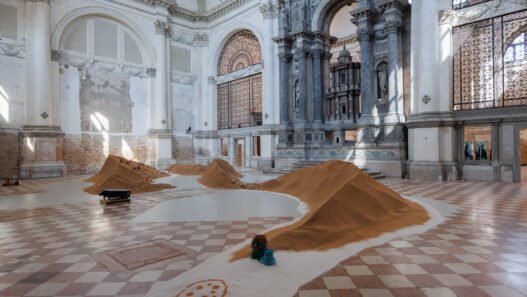



By 2025, the Middle Eastern art ecosystem had moved decisively beyond a phase of rapid expansion, establishing itself as a stable and influential pillar within the global cultural landscape. This shift was marked by a growing sense of cultural authorship, as institutions across the region increasingly shaped their own curatorial frameworks, production models, and critical narratives rather than relying on imported formats.
From the industrial warehouses of Riyadh’s JAX District to the museum-led developments of Abu Dhabi, 2025 revealed a region operating with confidence, scale, and intellectual ambition. The following five events stood out not only for their visibility, but for the distinct roles they played in redefining how art is produced, circulated, and engaged with across the Middle East.
1. Diriyah Contemporary Art Biennale | Riyadh
Theme: “In Interludes and Transitions” 
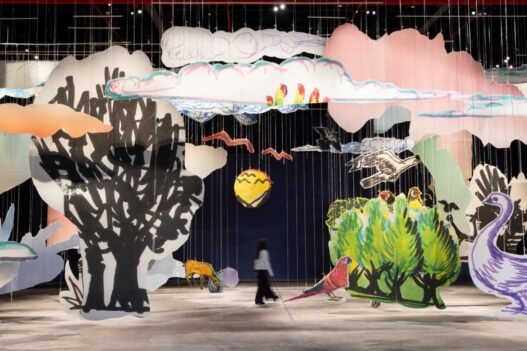
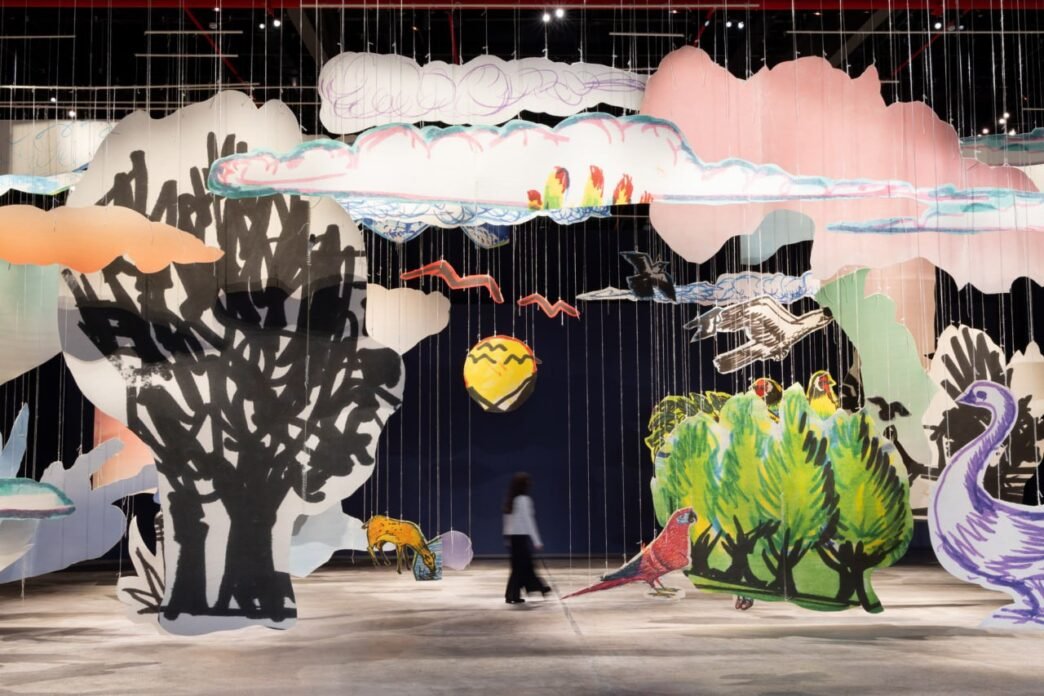
Hosted within the refurbished industrial warehouses of Riyadh’s JAX District, the Diriyah Contemporary Art Biennale stands as Saudi Arabia’s leading platform for contemporary artistic discourse. In 2025, the Biennale deliberately moved away from the grand spectacle that characterized its early editions, instead embracing a more measured, research-driven approach that explored the subtleties of a society in transition. Positioned as a conceptual bridge between the Kingdom’s deep cultural heritage and its rapidly evolving future, the exhibition brought process, context, and intellectual inquiry to the forefront.
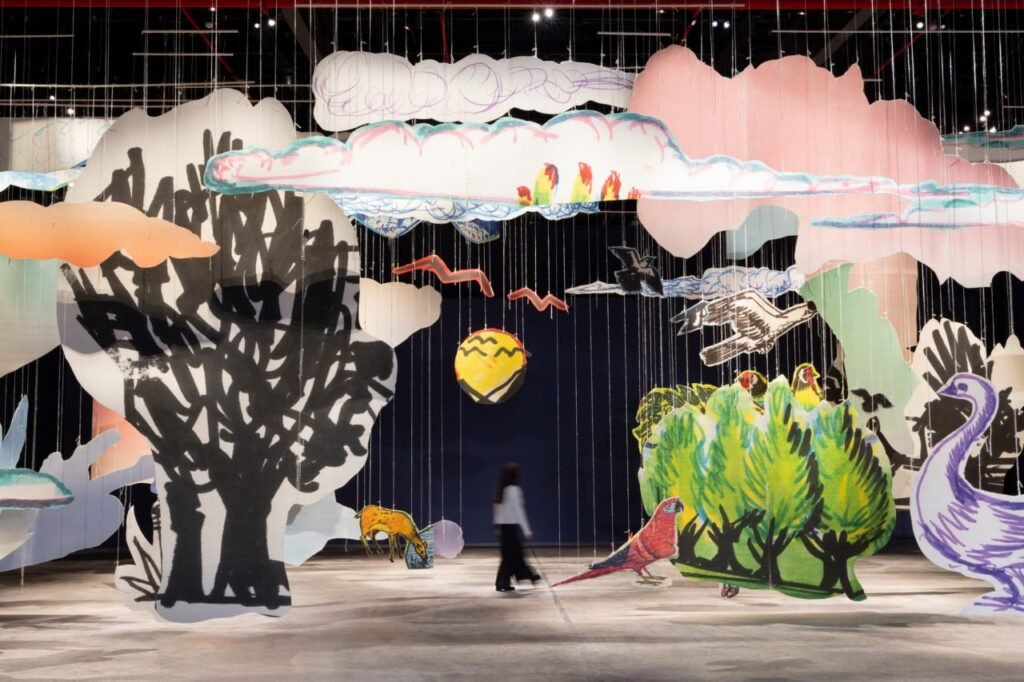
Its influence extended well beyond exhibition halls. Featuring over 30 newly commissioned site-specific works, the Biennale invited international and regional heavyweights to respond directly to Riyadh’s physical and cultural topography. This approach decisively reframed the city’s role, from a recipient of imported cultural narratives to an active site of collaborative authorship and original contemporary theory.
The surrounding Art Week further amplified its impact, bringing together more than 45 international and regional galleries and reinforcing Riyadh’s growing gravitational pull within the global art market. Crucially, the Biennale also acted as a catalyst for local patronage, with several commissioned works acquired by the Saudi Ministry of Culture for inclusion in future national museum collections.
https://biennale.org.sa/en
2. Sharjah Biennial 16 | Sharjah
Theme: “To Carry”
Established in 1993, the Sharjah Biennial remains the Middle East’s longest-running and most intellectually rigorous contemporary art event. Its 16th edition unfolded across 17 venues throughout the Emirate, activating a striking range of sites, from abandoned date plantations to the iconic Flying Saucer building. This expansive geography reinforced Sharjah’s longstanding commitment to embedding contemporary art within lived, historical, and architectural contexts.
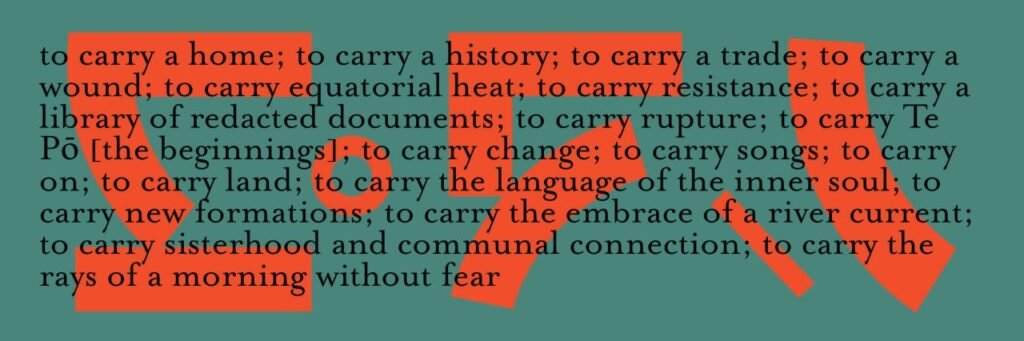
Sharjah Biennial 16 continued to function as the region’s intellectual North Star, centering Global South perspectives and deeply rooted decolonial narratives. Widely regarded as one of the most radical reimaginings of the international biennial model, it consistently privileged indigenous and historically marginalized voices over commercial imperatives or market-driven trends.
Its influence extended decisively into the global institutional sphere. The Biennial remains an essential talent-scouting ground for curators from major museums, including Tate, MoMA, and the Centre Pompidou, seeking under-recognized masters and practices that operate beyond the dominant Western canon.
https://www.sharjahart.org/en/
3. Art Dubai | Dubai
Focus: Contemporary, Modern, and Digital Frontiers
Art Dubai continues to function as the commercial heartbeat of the Middle Eastern art ecosystem. Held at Madinat Jumeirah, the fair’s 18th edition in 2025 placed a pronounced emphasis on what might be described as the Technological Sublime, deliberately collapsing the boundaries between traditional fine art, immersive media, and the rapidly expanding digital creative economy. With more than 120 galleries participating from over 65 cities worldwide, the fair underscored Dubai’s role as a truly global marketplace rather than a regional node.
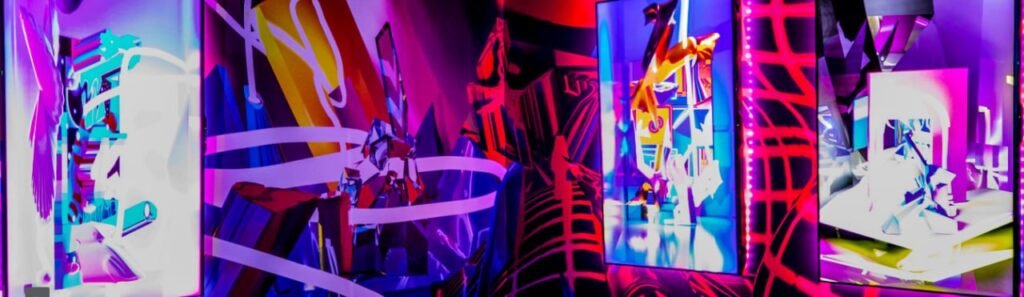
Dubai’s strategic positioning as the world’s leading hub for digital art was further consolidated through Art Dubai Digital, now widely regarded as the international benchmark for integrating AI, VR, and data-driven practices within a conventional fair structure. Rather than treating digital work as a parallel or experimental sidebar, the section demonstrated how emerging technologies can coexist seamlessly with modern and contemporary art histories.
Market dynamics in 2025 reflected this hybrid evolution. The fair recorded a notable surge in phygital sales, with collectors increasingly acquiring digital works alongside their physical counterparts, a trend driven largely by a new generation of tech-wealthy patrons. Record-setting opening-day placements included digital sculptures by the Turkish collective OUCHHH Studio, signaling both market confidence and the maturation of digital art as a serious collectible category.
Here is a refined and fully integrated version, with the statistics embedded naturally and the public-facing dimension clearly articulated:
https://www.artdubai.ae/
4. Art Week Riyadh (AWR) | Riyadh
Theme: “At The Edge”
Art Week Riyadh operates as the expansive, public-facing framework that unfolds alongside the Biennale, transforming the city itself into an open cultural platform. Conceived as a city-wide activation rather than a single-site event, AWR is designed to nurture the local creative economy and reposition art as an everyday cultural practice for the Saudi public – less an elite pursuit, more a lived lifestyle.
In 2025, the initiative successfully bridged the long-standing divide between institutional “high art” and broader audiences. Over a sixteen-day period, the program brought together more than 45 local and international galleries and delivered an ambitious schedule of talks, workshops, and pop-up exhibitions across Riyadh. By opening private collections and artist studios, including those of Ahmed Mater and Muhannad Shono, Art Week Riyadh played a pivotal role in cultivating a new culture of local art appreciation and collecting.
Education formed a central pillar of the initiative. Dozens of professional workshops were developed in collaboration with leading international houses such as Sotheby’s and Christie’s, signaling a long-term investment in knowledge transfer and market literacy within the Kingdom.
Perhaps most significantly, AWR helped solidify the JAX District as a permanent creative hub. Much like Shoreditch in London or Chelsea in New York, the district has emerged as a focal point for galleries, studios, and cultural production (distinctly Khaleeji in character), yet globally legible in ambition and scale.
5. Abu Dhabi Art | Abu Dhabi
Focus: Institutional Building and South–South Dialogue
Held at Manarat Al Saadiyat, Abu Dhabi Art is closely aligned with the museum-led development of Saadiyat Island, home to institutions such as the Louvre Abu Dhabi and the forthcoming Guggenheim Abu Dhabi. The 2025 edition marked the fair’s most ambitious iteration to date, with a clear emphasis on under-represented art histories and expanded global participation.
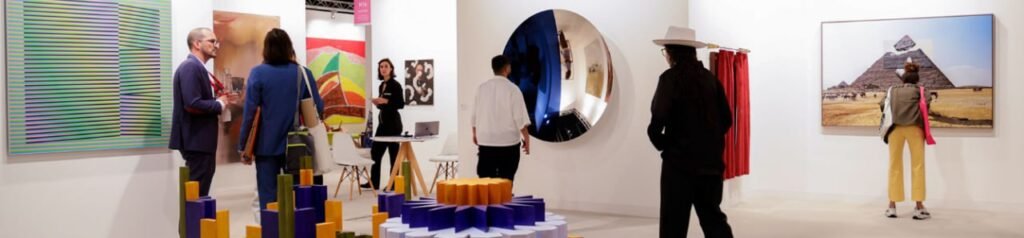
That year, the fair introduced two major curated sectors (Nigeria Spotlight and Modern Türkiye) positioning Abu Dhabi as a key platform for exchange between West Asia, North Africa, and the Gulf. With 142 galleries participating from 34 countries and representation spanning 52 cities worldwide, the fair underscored its role as a meeting point for South–South artistic dialogue and trade.
Market activity was equally pronounced. Regional mainstays such as Athr and Gallery Isabelle reported sell-out booths during VIP days, while the Beyond Emerging Artists (BEA) program supported three regional artists through international exhibition tours, facilitating their entry into the global secondary market.
Bottom Line
Taken together, these five events illustrate a region no longer defined by catch-up growth or external validation. Instead, the Middle East in 2025 functioned as a constellation of interconnected yet distinct art ecosystems, each contributing to global discourse through its own institutional priorities, market strategies, and cultural contexts.
Whether through research-driven biennials, commercially sophisticated fairs, or large-scale public activations, the region demonstrated an ability to operate simultaneously across intellectual, civic, and market spheres. What emerged was not a singular narrative, but a layered and plural landscape, one in which the Middle East is increasingly shaping, rather than responding to, the terms of global contemporary art.